Mario Satta
Man on FireMario Satta is a policeman distinguished by both conspicuous elegance and a methodical intelligence. He first appears as a solitary diner, but his later deductions make him an important investigator of the violence surrounding the Balletto kidnapping; at the story’s end, he is also among those who reach the wounded Creasy.
Identity and Introduction
At lunch, Satta sits alone at the back of a crowded restaurant, eating cappon magro. His appearance draws covert attention: he wears a beautifully cut dark-gray suit, a sky-blue shirt, a wide maroon-silk tie, flat cuff links, and a matching Patek Philippe watch. His lean, tanned face and slightly aquiline nose give him the air of a successful actor or fashion designer, not the policeman he is. His aristocratic mother, the narration notes, would have winced at that description. The contrast establishes Satta as a figure whose polished social presence sits beside the unglamorous work of police investigation.
Investigation and Deduction
At the scene of Giorgio Rabbia’s death, Satta tests whether the killing signals a wider conflict. He considers three possibilities: that the Abrata and Fossella families have begun fighting over territory; that Rabbia was caught stealing from the organization; or that the attack came from outside. The first explanation seems unlikely to him because the two families have their city divided and are cooperating, while a war would require approval from Floriano Conti and, ultimately, Don Cantarella—neither of whom wants one. The theft theory also fails: Rabbia had collected for fifteen years and, though foolish, had been loyal. Satta is left with the possibility of an outside attack.
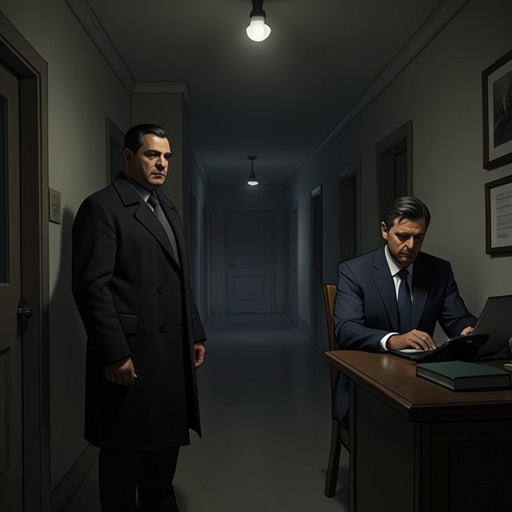
His methodical attention to competing explanations becomes decisive when he returns to the case. For two days he scarcely leaves his office, working through the connections among Rabbia, Violente, Giacomo Sandri, and the Fossella family. His affair with an actress has ended; she had objected to the interruptions, which threatened both her composure and her career, leaving Satta able to concentrate. The breakthrough comes when he removes Violente from the chain of causes: the killing was incidental, and Violente had been protecting Sandri. That distinction redirects Satta’s reasoning to the Pinta Balletto kidnapping plot and makes him the first to connect the apparent sequence of killings to the kidnapping.
At Creasy’s Wounding
When Satta and the others enter, Creasy calls for help. Satta bends over him and meets his steady gaze, then takes in the blood and torn flesh while Guido supports Creasy beneath the arm. Satta urgently directs Creasy to place his right hand beside his own; as he kneels and reaches forward, Guido positions Creasy’s hand. In this final glimpse, Satta’s analytical role gives way to immediate, practical assistance at Creasy’s side.
Narrative Role and Method
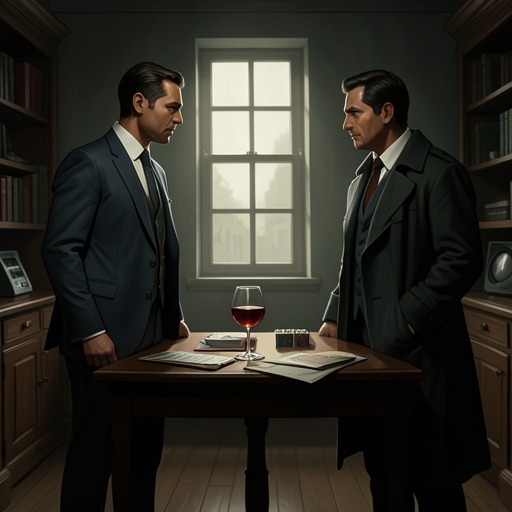
Satta’s investigation gives the reader a disciplined way to approach violence whose causes are initially obscured. He makes his reasoning available to Massimo Bellu, thinking aloud rather than presenting a finished conclusion; the exchange turns private analysis into a testable account of uncertainty. Later, the distinction he draws between an incidental killing and the protection of another man converts a confusing sequence into a connection with the kidnapping plot. The novel thus makes Satta’s intelligence consequential not because it prevents the violence, but because it can identify the structure behind it.